Book Discussion on Electoral Mathematics: The Design of Wasted Votes in Indonesian Elections



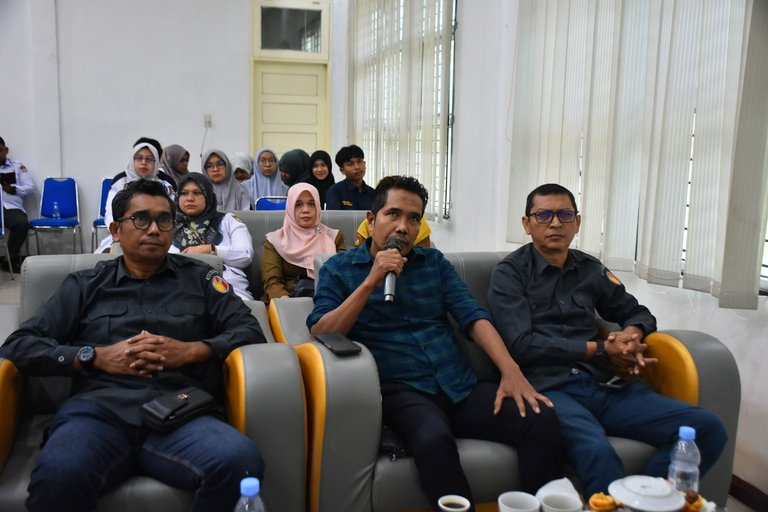


Today, Monday, September 21, 2026, the Independent Election Commission (KIP) of Lhokseumawe City held the first session of its book discussion series. The book selected for discussion was Matematika Pemilu: Desain Wasted Vote pada Pemilu Indonesia (Electoral Mathematics: The Design of Wasted Votes in Indonesian Elections).
The selection of this book was the result of a collective decision reached after two meetings held in the main hall of the KIP Lhokseumawe City Office. Both meetings were chaired by the Chairperson of KIP Lhokseumawe City, Abdul Hakim, S.E.
The book was written by Prof. Dr. phil. Ridho Al-Hamdi, S.Fil.I., M.A., who serves as Dean of the Faculty of Social and Political Sciences at Universitas Muhammadiyah Yogyakarta. In addition to Matematika Pemilu: Desain Wasted Vote pada Pemilu Indonesia, Prof. Ridho—as I personally address him—has authored numerous other books.
Among his works are Partai Politik Islam: Teori dan Praktik di Indonesia (2013), Indonesian Political Ideology: Political Parties and Local Governance in Yogyakarta Municipality 1998–2015 (2017), Islam dan Politik di Indonesia: Pemikiran Muslim Modernis Pasca Orde Baru (2018), Ambang Batas Pemilu: Pertarungan Partai Politik dan Pudarnya Ideologi di Indonesia (2020), and Soliditas Partai Islam: Pengalaman PKS di Pemilu 2014 (2021).
There are still many other books that he has written. I must admit that I am quite impressed by this scholar. Born in 1985, this professor of political science is still relatively young, yet remarkably productive in producing works on elections, political parties, democracy, and Indonesian politics.
The book discussion held this morning explored applied mathematics in the political arena, particularly elections, with a focus on how votes received by political parties are converted into seats in parliament.
I served as the moderator of the discussion. According to the author, the central issue examined in the book is the phenomenon of the wasted vote—votes cast by citizens that can no longer be converted into parliamentary seats due to the limited number of seats available in an electoral district, as well as the existence of a parliamentary threshold.
Prof. Dr. phil. Ridho Al-Hamdi, S.Fil.I., M.A., draws on the results of the 2014 and 2019 legislative elections in Indonesia to calculate and compare the number of wasted votes produced under two different vote-to-seat allocation methods: the Hare Quota (HQ) and Pure Sainte-Laguë (PSL) methods.
I personally became particularly interested in examining the main factors that cause votes to be wasted.
The first is the parliamentary threshold, namely the minimum percentage of votes that a political party must obtain in order to qualify for parliamentary representation.
The second is the limited number of seats available in an electoral district, particularly when the number of political parties competing exceeds the number of seats available.
The central argument of Matematika Pemilu is that the design of an electoral system—particularly the method used to convert votes into parliamentary seats, the parliamentary threshold, and the number of seats allocated to each electoral district—plays a significant role in determining how many citizens' votes can ultimately be translated into political representation in parliament.
Based on calculations using the 2014 and 2019 legislative election results, the author demonstrates that the Pure Sainte-Laguë method produces fewer wasted votes than the Hare Quota method. The book therefore recommends retaining the Pure Sainte-Laguë method and maintaining or lowering the parliamentary threshold in order to minimize the number of votes that fail to translate into parliamentary seats.
There is, however, one particularly interesting aspect of the book that deserves further discussion. Matematika Pemilu is not merely about the mathematical mechanics of vote counting. At a deeper level, it examines the relationship between the design of an electoral system and the degree to which citizens' votes are represented in parliament.
In this sense, the concept of the wasted vote can serve as an important indicator for examining whether an electoral system is truly capable of transforming citizens' votes into proportional political representation.
For me, this is what makes the book especially relevant—not only as a study of electoral mathematics, but also as an invitation to reflect on how electoral design can shape the quality of representation in a democracy.
[Bahasa]
HARI ini, Senin 21 September 2026 Komisi Independen Pemilihan (KIP) Kota Lhokseumawe menggelar bedah buku sesi pertama. Buku yang dipilih berjudul; "Matematika Pemilu Desain Wasted Vote pada Pemilu Indonesia."
Buku yang kami pilih ini hasil keputusan bersama setelah kami melakukan dua kali rapat di aula Kantor KIP Kota Lhokseumawe, dipimpin Ketua KIP, Abdul Hakim, SE.
Buku tersebut karya Prof. Dr. phil. Ridho Al-Hamdi, S.Fil.I., MA. beliau adalah Dekan Fakultas Ilmu Sosial dan Ilmu Politik Universitas Muhammadiah, Yogyakarta. Selain buku Matematika Pemilu Desain Wasted Vote pada Pemilu Indonesia, Prof Ridho, begitu saya menyapa beliau juga telah menulis belasan bahkan puluhan buku lainnya.
Buku-buku yang beliau tulis di antaranya; Partai Politik Islam: Teori dan Praktik di Indonesia (2013), Indonesian Political Ideology: Political Parties and Local Governance in Yogyakarta Municipality 1998–2015 (2017), Islam dan Politik di Indonesia: Pemikiran Muslim Modernis Pasca Orde Baru (2018), Ambang Batas Pemilu: Pertarungan Partai Politik dan Pudarnya Ideologi di Indonesia (2020), Soliditas Partai Islam: Pengalaman PKS di Pemilu 2014 (2021).
Masih banyak buku lain yang beliau tulis. Saya cukup kagum pada penulis ini, karena guru besar ilmu politik kelahiran tahun 1985 ini menurut saya masih cukup muda tapi sangat produktif.
Oh ya, bedah buku "Matematika Pemilu Desain Wasted Vote pada Pemilu Indonesia" yang berlangsung pagi tadi membahas matematika terapan dalam isu politik, khususnya pemilu, dengan fokus pada bagaimana suara yang diperoleh peserta pemilu dikonversi menjadi kursi di parlemen.
Saya bertindak sebagai moderator dalam bedah buku tersebut. Menurut penulis sendiri, persoalan utama yang dikaji dalam buku tersebut adalah fokus adalah wasted vote, yaitu suara pemilih yang tidak dapat dikonversi lagi menjadi kursi parlemen karena keterbatasan kursi di daerah pemilihan (dapil) maupun adanya ambang batas parlemen (parliamentary threshold).
Prof. Dr. phil. Ridho Al-Hamdi, S.Fil.I., MA sebagai penulis menggunakan hasil Pemilu Legislatif 2014 dan 2019 di Indonesia untuk menghitung serta membandingkan jumlah suara yang terbuang melalui dua metode konversi suara, yaitu Kuota Hare (KH) dan Sainte Lague Murni (SLM).
Saya sendiri menjadi tertarik untuk mengkaji tentang faktor utama yang menyebabkan suara menjadi terbuang, yaitu: Ambang batas parlemen. Persyaratan minimal suara yang harus diperoleh partai agar dapat memperoleh kursi di parlemen.
Kemudian keterbatasan jumlah kursi dalam dapil, sementara jumlah partai peserta pemilu lebih banyak daripada kursi yang tersedia.
Inti buku Matematika Pemilu adalah bahwa desain sistem pemilu, terutama metode konversi suara menjadi kursi, ambang batas parlemen, dan jumlah kursi dalam dapil, sangat menentukan seberapa banyak suara rakyat yang akhirnya dapat diterjemahkan menjadi representasi politik di parlemen.
Berdasarkan perhitungan terhadap Pemilu 2014 dan 2019, penulis menunjukkan bahwa Sainte Lague Murni menghasilkan jumlah wasted vote yang lebih rendah dibandingkan Kuota Hare, sehingga buku merekomendasikan penggunaan Sainte Lague Murni serta mempertahankan atau menurunkan ambang batas parlemen untuk meminimalkan suara yang tidak terkonversi menjadi kursi.
Ada satu hal yang menarik untuk didiskusikan lebih lanjut dari catatan penting untuk bahan bedah buku: buku ini bukan sekadar membahas matematika penghitungan suara, tetapi pada dasarnya membahas hubungan antara desain sistem pemilu dan tingkat keterwakilan suara rakyat.
Karena itu, wasted vote dapat dilihat sebagai salah satu indikator untuk mempertanyakan apakah desain pemilu mampu mengubah suara pemilih menjadi representasi di parlemen secara proporsional.