Strait of Hormuz and the Iran War – Part 2: Reasons for War and the Bigger Agenda

Hi Everyone,

Welcome to Part 2 of my series on the Strait of Hormuz and the Iran War.
Part 1 covered various aspects of Iran. Iran’s past hundred years, particularly the 1979 Revolution, have played an important part leading up to the current war.
Part 2 covers the US’ and Israel’s relationship. This is important because the two countries are allies in the war against Iran. Like Iran, the relationship is complicated, and the media are misleading people on its true nature.
Part 2 continues by exploring the objectives of the war from both Donald Trump’s perspective as well as the US Establishment’s; we should be quite confident that they are not the same. The post wraps up by discussing the bigger picture and how the outcomes from this war could fit into the Establishments’ agenda.
Israel Captured by the US Establishment
Israel is the US’ partner in the war against Iran and, arguably, Shia populations in general. To put this war in greater context, it is important to discuss the relationship between these two countries.
The US has arguably been Israel’s greatest ally for a very long time. The US has continued to provide Israel with weapons and aid. The US has consistently supported Israel at the UN General Assembly and Security Council meetings, while most other nations have opposed them. Given the US’ position on the Security Council, this is significant. Their alliance appears to have only grown stronger since Donald Trump has become president. For example, Trump and his team managed to negotiate a deal with Hamas to release the remaining Israeli hostages.
However, the US Establishment has also sought to isolate Israel from the rest of the world. In 2025, 147 of the 193 United Nations member States recognised Palestinian Statehood (Ahram Online). This is despite the fact that no clear borders for such a state can even be defined. It also follows closely in the aftermath of the 2023 Hamas attacks on Israel; such timing can be considered a huge insult to Israel and tacit support for Hamas’ actions.
In 2024, an ICC arrest warrant was issued for Prime Minister Benjamin Netanyahu. Several European countries have threatened to arrest him if he enters their country or even their airspace (Observer Diplomat).
In 2025, Israeli ministers Itamar Ben-Gvir and Bezalel Smotrich were sanctioned by several Western countries; these included the UK, Australia, Canada, New Zealand, Norway, Spain, Slovenia, and the Netherlands (Euro News and PBS). In 2026, the EU agreed to sanction Israeli settlers in the West Bank over alleged violence (BBC). None of these sanctions would substantially hurt Israel’s economy or ability to remain a military power.
The US Establishment is the most powerful voice in the Western world. The UN headquarters are even based in New York. Other Western countries always fall in line with the US regarding their actions if not necessarily with their words. The current battle of words between Donald Trump and many other Western ‘leaders’ is only for the purpose of maintaining the illusion of the left-right divide.
The best example of Western leaders falling in line is NATO. The US is the leader of NATO. They account for over 60% of military spending (Visual Capitalist). They have dozens of bases and thousands of troops across NATO member nations (24 Italy).
Between 2020 and 2024, the US provided European NATO members with 64% of their weapons (Politico). The European countries have a complete military dependence on the US. The NATO Secretary General even referred to Donald Trump as ‘Daddy’. Considering the current war in Ukraine, the US could easily pressure all the European countries and other NATO members into supporting Israel. However, that has not happened.
The US has either allowed or encouraged their NATO allies to publicly drop support for Israel. This has allowed predominantly ‘left-leaning’ NATO Governments to appease a large portion of their voter base who have been manipulated to dislike Israel by ‘left-leaning’ media, NGOs, activist groups, trade unions, and even the actions of Israeli officials themselves (e.g., Itamar Ben-Gvir’s public shaming of detained flotilla activists).
The largest US military base in the Middle East is located in Qatar. This base typically hosts as many as 10,000 troops and approximately 100 aircraft or drones (Wikipedia). US companies have invested heavily in Qatar, and Qatar has invested heavily in the US. Donald Trump and the Qatari leadership have agreed to a trade partnership that could be worth as much as $1.2 trillion (The Media Line).
Qatar is also the main backer of Hamas. They have given them US$1.8 billion since 2012, and they pledged $360 million a year in 2021. Qatar hosts the leaders of Hamas, where they live in luxury five-star accommodation. They use their state media, Al Jazeera, to promote Hamas and anti-Israel propaganda. They have also sponsored and funded Western media, a possible reason for the rise in anti-Israel propaganda in the West (FDD). The Qatari Government funded other terrorists. They have hosted terrorist leaders from Afghanistan and Syria. They have donated over $1 billion to the Muslim Brotherhood (The Federalist).
If Israel had considerable influence over the US, their leadership would be able to oppose US’ close relationship with Qatar. The US Establishment most likely supports Qatar because it is profitable for them and to continue to stoke tensions between the Sunni and Shia Muslims.
The US benefits from Israel’s isolation because it makes Israel more dependent on them. Thus, giving the US greater control over Israel. US control over Israel is of great importance, as it gives the US its strongest grip on the Middle East. The many US military bases across the Middle East also give the US power, but it is nothing compared to a whole country acting as a giant base that also provides its own military personnel.
The US has ensured that Israel maintains a military strong enough to intimidate all the Gulf States, thus ensuring their continued compliance. Israel’s military is also capable of inflicting significant damage to Iran on the US’ behalf. In return, Israel faces the brunt of Iran’s retaliation with minimal consequences to the US or its citizens.
Israeli leadership, Prime Minister Benjamin Netanyahu in particular, prioritises the US Establishment’s interests in the Middle East. We could argue that in doing so, they are acting in Israel’s short-term best interests because they maintain US support and protection. In the long term, this relationship could prove disastrous to Israel. Using Israel as a threat and, in some cases, a battering ram only antagonises neighbouring countries (e.g., Lebanon, Syria, Turkiye, and Iraq), which are not friendly towards Israel but do not act because of current US threats and diplomatic arrangements.
It is likely that the current Israeli leadership do not fully understand the extent of their isolation. The EU Establishment appears ready to break ties with Israel on a long-term basis. They can back this decision based on pressure from their own populations. Considering Trump’s low popularity and the impending further economic crash once the impact of the Iran war is fully felt, it is likely the next US President will be from the Democratic Party. Considering the change in public opinion against Israel, especially from Democrat voters, the next president will distance themselves from Israel or worse if Alexandria Ocasio-Cortez wins (Fox News).
The Republican base has grown more divided over Trump’s presidency, which is bad for potential candidates Marko Rubio and JD Vance. There are also the conspiracy theories, such as Israel controlling the US Government and the Greater Project Israel, which are being spread by popular ‘Conservative’ journalists such as Tucker Carlson. Almost 40% of Americans believe pro-Israeli groups (example given, AIPAC) have too much influence over the US Government (Arab American Institute).
AIPAC
The influence of the American Israel Public Affairs Committee (AIPAC) is difficult to deny when such a high percentage of candidates are backed by them. For example, in the 2024 elections, 97% of the candidates they backed won seats in Congress (Grokipedia). Is AIPAC influence equivalent to Israeli influence on the US leadership? First, we need to establish if AIPAC is even a pro-Israel group.
AIPAC is not funded by Israel or any Israel-based companies or groups. Instead, it is funded entirely by US citizens (AIPAC). Much of the money donated to AIPAC is from Christian Evangelicals (David E. Ostrich).
The objectives of AIPAC revolve almost entirely around bolstering Israel’s military capabilities. The US provides around $3.3 billion annually in military financing and another $500 million for missile defence programmes (Grokipedia).
Jan Koum, one of AIPAC’s biggest donors, is also a major supporter of financing Ukraine’s military efforts against Russia (Loomered). This has led to the prolonging of the war and deaths of millions of soldiers. This is clearly not in the interest of the Ukrainian people. Likewise, the billions in military financing are not in the best interests of the Israeli people. It is in the best interests of the US Establishment. It gives them greater control over Israel as well as encouraging them to fight wars on their behalf.
The majority of Christian Evangelicals are also Christian Zionists. They believe that it is biblical prophecy for the second coming of Jesus that all the Jews must return to the Holy Land. Therefore, they strongly support the creation of Israel and its expansion to encompass all the land promised to the Jews in the Bible. This ideology gives credence to the conspiracy theory of the Greater Israel Project. However, they also believe that an apocalyptic war is a precursor to the return of Jesus. Two-thirds of Jews in Israel would be killed, and the other third would be converted to Christianity (Jewish Virtual Library).
Both Turkiye (Magog based on geography) and Iran could be involved in that final war (Jewish Voice). Christian Evangelicals believe that Jesus will intervene to save Israel. This is likely a reason why they are so eager for Israel to wage war with Iran and will soon want them to go to war with Turkiye. Isolating Israel from the rest of the world (described earlier in the post) also fits in with their belief of the end of days’ global opposition to Israel. People acting on these beliefs do not have the best intentions for Israeli people or Jews in general.
The Christian Evangelicals are not the true driving force behind the US position on Israel or the war with Iran. They are being manipulated based on their belief system. The agenda expands much broader than Israel.
Section 219 of the National Defence Authorization Act
Section 219 of the National Defence Authorization Act (NDAA) is causing some controversy in the US. It aims to establish the United States–Israel Defence Technology Cooperation Initiative. This would accelerate joint research, development, and industrial integration of defence technologies. The intention is to embed Israeli-origin technology into U.S. military systems. This would include missile defence, counter-drone systems, artificial intelligence, quantum technology, and cybersecurity (Factually).
Political commentators and journalists such as Tucker Carlson have raised concerns that such an arrangement would give Israel control over the US Government (Tucker Carlson). The main argument is that the US military would become dependent on specific Israeli-origin technologies by permanently integrating them into US defence programmes. This dependence would increase Israel’s influence over the US Government.
It initially sounds like a compelling argument. However, certain aspects of the initiative are unclear. If the US military becomes dependent on Israeli-origin technology developed by State-owned Israeli companies, the Israeli Government could gain influence over the US Government. This is highly unlikely to be the case. Israel has three state-owned defence companies. They are Israel Aerospace Industries (IAI), Rafael Advanced Defense Systems, and Tomer. The Israeli Government plans to privatise or partially privatise all three of these companies (CTech). Rafael could be listed on the New York Stock Exchange.
US companies are acquiring many of the remaining Israeli defence companies. For example, Ondas Holdings has acquired Sentrycs (drone interception), Omnisys (military software), Roboteam (UGVs) , 4M Defense, and has attempted to acquire mPrest (Iron Dome command systems) (CTech). Ondas Holdings is also hiring former top Israeli military and intelligence officers for high positions within the company (e.g., David Barnea, the former Mossad chief, and Yehuda Almakias, the former head of the Defence Ministry's R&D directorate). Other companies include Axon, which bought Carbyne (communications), and Kratos Defence and Security Solutions, which merged with communications supplier Orbit Communications Systems (Caliber).
The technology developed by the Israeli companies acquired by US companies aligns with the type of technology to be integrated into US defence systems outlined in Section 219 of the NDAA. These accusations and the privatisation of the largest Israeli defence companies give the Israeli Government less control over their own defence technology and development. Section 219 of the NDAA will not give the Israeli Government any leverage over the US Government. Instead, it has allowed the US Establishment (US companies) greater control over Israeli defence output, thus making it harder for Israel to diverge from the US.
Does Benjamin Netanyahu Control Donald Trump?
Another conspiracy theory is that Benjamin Netanyahu is able to control or greatly influence Donald Trump’s decision-making. Some claim this control is linked to donations/bribes (e.g., AIPAC), and others claim that he is able to control Trump using the Epstein files.
The Epstein files conspiracy theory is interesting. The Trump administration has released millions of documents, but some of them have been heavily redacted, and none of them contain incriminating evidence that has led to any arrests (OPB).
It does not matter what is in the Epstein files. Every bit of information could be released, and no further arrests would be made; these arrests would have already occurred. Making information public does not dictate the Department of Justice’s decision to prosecute individuals (NPR).
The contents of the Epstein files could cause public outrage. However, the current approach to the partial release has also caused public outrage. People will rely on their own imaginations about the horrendous activities on Epstein Island. This perception could be as damaging to Trump as the truth. Whatever contents that Israel could release from the Epstein files would probably make little difference to Trump’s reputation with his base.
Benjamin Netanyahu frequently meets with Donald Trump. These meetings are often followed by decisions or policy shifts. This does not mean Netanyahu is controlling Trump. Trump listens to Netanyahu because of his political experience and expertise and because of his standing within the Establishment.
In practice, the US has taken the lead in almost all decision-making regarding the Iran war. Recent examples include:
- The US has controlled the pace of the war with Iran.
- The US has determined when both the US and Israel attack as well as when they pause the fighting.
- The US dictates the terms in agreements such as ceasefires and the recent Memorandum of Understanding.
There are the occasional fake disputes where it appears Netanyahu is standing up to Trump. For example, rejecting the 15-point peace plan in Gaza (Daily Mail).
It is likely that Trump wanted Netanyahu to reject the peace deal. It makes Netanyahu look tougher by rejecting a deal that has been widely criticised within Israel. Doing so helps boost his popularity in Israel. Trump would prefer Netanyahu to remain Israeli Prime Minister over the other possible options. Benjamin Netanyahu’s actions have consistently supported US Establishment objectives.
How Do Israelis Feel About US Influence?
The Israel Democracy Institute frequently publishes surveys; one of them is the Israeli Voice Index. The April 2026 survey focused on opinions regarding defence. Below are the questions I believe are most pertinent to this post and the responses.
In your opinion, who has greater influence today over defense decisions relating to Israel? (%)

In your opinion, who has greater influence today over defense decisions relating to Israel? (Jews; %)

Contrary to the common US narrative that Israel has too much influence over the US Government, the Israelis believe that the US Government has greater influence over their military than their own Government. This sentiment has grown considerably among Israeli Jews over the six months between October 2025 and April 2026. This shift in sentiment is across the ‘left-right’ political spectrum.
Which of the following will better ensure the future of Israel’s security in the short term and in the long term? (total sample; %)

Which of the following will better ensure the future of Israel’s security in the short term and in the long term? (%)

Sentiment is also moving away from strengthening the military to reaching diplomatic solutions with countries within the region.
How would you rate the likelihood of a return to widescale conflict with Iran? (%)

If the war with Iran has indeed ended, to what extent do you think this serves Israel’s security interests? (%)

Most Israelis strongly believe war with Iran will break out again. Most Israelis are not satisfied that the war, if ended, has improved Israel’s security.
We can infer that, since most Israelis believe the US Government has greater influence over Israel’s military decisions, Israelis believe the US would want to continue the war with Iran. It is unclear from the survey if Israelis believe continuing the war would improve Israel’s security.
Optimistic about the future of democratic rule, national security, the economy, and social cohesion (total sample; %)

Optimism around democratic rule, national security, social cohesion, and the economy has been consistently low for the past year. The war with Iran appears to have lowered optimism regarding national security, with the fall aligning with the announcement of the Memorandum of Understanding between the US and Iran.
How to Break Free?
For Israel to survive as a sovereign nation, it needs to disconnect itself from the US Establishment. Israel’s best chance is a change of Government, which could occur in October this year. The new Government would have a fresh chance to rebuild relationships with other countries. Such a task would be extremely difficult considering current relations and US influence over Europe. The answer might be to look eastward towards countries such as India and even China.
Current polls suggest that the election will be a very tight race between the Likud and Yashar parties. Both parties are projected to win between 22 and 23 seats. That is well short of the 61 seats needed to form Government. Whoever wins comes down to which party can form a coalition of 61 or more seats. At the moment, it is predicted that the Yashar Party is in a better position to do that (Haaretz). This would mean Gadi Eisenkot would become the new Prime Minister.
It is unclear if a Gadi Eisenkot-led Government would be an improvement for Israel. Eisenkot does not have a relationship with Trump. This could be good if it allows Israel to subtly distance itself from the US, or it could be bad if it gives Trump and his administration an excuse to sharply turn away from Israel. Trump is known for making decisions based on how he feels about the personality of another leader. It is unclear how Gadi Eisenkot would repair and build relations with other countries.
An important positive of an Eisenkot Government is the commitment to a thorough and independent investigation into the October 7 massacre (Times of Israel). The current Government has refused such an inquiry. There is still so much unknown about what happened that day.
Eisenkot plans to increase the size of the Israeli military. He wants to conscript ultra-Orthodox Jews and Arab citizens into the military. This is likely to be met with opposition and is contrary to views indicated in the survey (Ynet news). This might be an indication that he is willing to use Israelis to fight more of the US Establishment’s wars. His goals of a larger military align with AIPAC objectives of greater military support for Israel.
Eisenkot plans to increase Jewish immigration into Israel. He plans to bring in one million Jews in the next ten and another million before 2048 (All Israel News). This indicates a desire for further tensions with Israeli Arab populations and Palestinians. This goal appears to align with the Christian Evangelicals goal of returning all the Jews to Israel.
Why Does the US Establishment Want to Attack Iran?
In 2007, General Wesley Clark listed seven countries that the US was going to destroy in the next five years. These countries were Iraq, Syria, Lebanon, Libya, Somalia, Sudan, and Iran (Global Research). Almost twenty years later, we could argue that Iran is the only country not yet destroyed by the US.
Iraq became a failed nation after the 2003 Iraq War. After Muammar Gaddafi was captured and executed in 2011, Libya became a failed state run by warlords. In 2024, Syria became a failed state when terrorists who went on to take over the State drove out Bashar al-Assad. Somalia has become a failed state from civil wars stoked by the US, which included the US-backed Ethiopian invasion in 2007. Sudan has suffered a similar fate from US-driven civil wars. Lebanon is a failed state that has faced years of internal turmoil and might be on the verge of another civil war (Iran Daily).
The US’ presence in the Middle East has always been about control. This control includes the Gulf States and Israel. Iran has been a source of instability, and the US has ensured that it has become a threat (see the section in Part 1 on Shia-Sunni tensions). This threat has been to the benefit of the US Establishment, as they have been able to manipulate the region into accepting their presence. Eventually Iran’s usefulness as a perennial enemy would run out. At this point, they would be destroyed. Hence, the reason Iran was last on the list.
Shift in Goals
A lot has changed over twenty years; US military dominance has diminished. Despite sanctions, Iran has avoided internal collapse. They have maintained support of Shia militias such as Hezbollah in Lebanon and the Houthis in Yemen. They have also established better relationships with Russia and China.
The nature of warfare has also significantly changed from twenty years ago. Modern missiles and drone technology have made conventional invasion considerably more difficult. The Russia-Ukraine war is a great example of the effectiveness of drone warfare.
The goals of the US and Global Establishments have evolved. Countries have lost importance. Mega companies can operate anywhere in the world. The Global Establishment has captured most countries in some form; this was confirmed by the almost universal response during the Covid-19 fiasco. National Governments are no longer important. International governing bodies can replace them.
The US or any of the Western countries do not need to be strong or possess wealth. Wealth only needs to be controlled by Big Business and the banks. Digital currency will ensure wealth does not escape out of the system. Artificial intelligence will replace most white-collar jobs and jobs that require education. Low-educated migrants, mostly Muslim, from Africa and South Asia will perform manual jobs. Western-style democracy will no longer be necessary. The new migrants will be more interested in security and basic needs than ‘democracy’. They will also be controlled by Islamic ideology. However, certain aspects of ‘democracy’ will remain for the benefit of some, but it will look very different.
Donald Trump has given many mixed messages about why the US is attacking Iran. It appears he believes or believed that he could overthrow the Iranian Government. He has even claimed that he will play a role in selecting Iran’s new leader (Reuters). The leader would allow the US unfettered access to Iran’s resources, oil in particular. It was as if Trump were riding high after kidnapping the President of Venezuela, Nicholas Maduro, which he claims has given the US control over Venezuela’s vast supply of oil.
Donald Trump is the ‘elected’ President of the US. Like any ‘elected’ leader, he is a puppet of the Establishment. Donald Trump has been given a long leash to do a lot of what he pleases (e.g., help his family profit from fluctuations in the market and oil prices) as long as he serves the Establishments long-run goals. The US Establishment wanted the US to go to war with Iran to further certain long-term agendas. Gaining immediate access to Iran’s oil supply would not have been of high priority. However, allowing Trump to believe that to be the goal acts as great motivation for him to pursue this war. This is especially true after his success in Venezuela.
The US and Global Establishment had little interest in winning the war in a manner that would enable them to replace the Iranian leadership with their own puppets. The first indication of this was their intention to just use purely airstrikes. It is almost universally accepted by experts that achieving regime change through airstrikes alone is not possible (ABC).
Another approach is to destabilise the population from within. This has worked in countries where the population is divided, for example, Ukraine. The January riots/uprising were incredibly violent, but they were not even close to threatening the current leadership. This approach does not work because the country is not significantly divided. They are held together by their Shia faith.
Killing Supreme Leader Ali Khamenei and several of his family members on day one of the war ensured the people of Iran would rally behind their leadership. This assignation was more than just an attack on Iran. It was also an attack on all of Shia Islam. This led to Shia Muslims in Yemen, Lebanon, and Iraq becoming involved in the war. The attack on the Minab Girls’ School further strengthened the resolve of the Iranian people to fight back.
These attacks ruined any real chances of a quick negotiated end to the war. This could have also ended Khamenei’s fatwa (commitment) to not build nuclear weapons. The new Supreme Leader may not share this opinion on the matter (The Arab Weekly). This war has most likely brought Iran closer to obtaining nuclear weapons. This is most likely a goal of the US Establishment. Nuclear weapons make Iran an even bigger threat.
The US Establishment wanted a war long enough to achieve their real objectives.
Fitting Into The Broader Agenda
The US and Global Establishment’s biggest long-term goal is the dismantling of Western countries and societies. This goal is critical to facilitate the final transfer of power from nations to organisations. When the US attacked Iran, Iran responded in several ways. Its most impactful response was the closure of the Strait of Hormuz. The closure was threatened by Iran prior to the war and would have not been a surprise to the US.
More than 20% of the world's oil supply passes through the Strait of Hormuz (Visual Capitalist). Its closure has massive implications for global oil supply and ultimately prices. Oil is critical to almost every industry. Prolonged shortages and high prices can cripple economies worldwide. Europe will be badly affected, as it has sanctioned Russian oil and gas, which are already pushing their energy prices higher.
The true effect of oil shortages from the closure/partial closure of the Strait of Hormuz has yet to be felt because the US is releasing its reserves (News Week) and Saudi Arabia has lowered its prices and increased supply (Blooming). This relief will not last long. The US reserves will eventually run out, and the Houthis are attacking Saudi Arabian oil tankers in the Red Sea (The Hill). Saudi Arabia’s oil exports have fallen significantly in the month of July (Bloomberg).
If the situation remains as it is, the global economy could be facing a depression-level crisis by October (National Security Journal). The situation could be much worse even sooner if the US attacks and destroys Iranian infrastructure, which then prompts an Iranian response that destroys oil infrastructure across the Gulf States (Jerusalem Post).
As catastrophic as oil shortages might be, the biggest global impact could come from fertilizer shortages. One-third of the world’s fertilizer supply passes through the Strait of Hormuz (World Politics Review). The combination of shortages of fertilizer and fuel shortages is leading to a catastrophic global food crisis.
Sub-Sahara and North Africa are the regions that are most vulnerable to a food crisis caused by the closure of the Strait of Hormuz (Middle East). Somalia, Sudan, Niger, Mali, Burkina Faso, Chad, Kenya, Tanzania, Egypt, and Ethiopia are already suffering from famine or will soon be suffering severe famine (Democracy Now, NBC News, and Breitbart). Tens, even hundreds, of millions of people will be severely affected.
Even if the Strait of Hormuz opens now, millions of people will still die (LBC). The food crisis will be so severe even Western countries such as Australia and New Zealand will face severe food shortages (UNCTAD).
Why would the US and Global Establishments want to starve and kill millions of people, Africans in particular? It is nothing personal against them. The Establishments want to cause mass instability in these countries. Mass starvation will lead to other crises as people fight each other for the limited supply of food. This could lead to mass unrest and even civil wars. These countries will become unliveable. People will flee on mass. There will be limited options for them, as the whole region will be in turmoil. They flee to what they consider their best option, which will be Europe and North America.
The US Establishment opened the door to mass migration to Europe in 2011 when they helped Libyan rebels capture and kill Muammar Gaddafi. During Gaddafi’s rule, Libya’s borders were strictly controlled, and African migrants were less able or even willing to cross over into Europe. After his death, that completely changed.
The fall of Gaddafi left a power vacuum. This enabled migrant smugglers and trafficking networks to expand. The number of migrants entering Europe through Italy increased from 28,500 in 2011 to 163,000 in 2016 (Chatham House). A mass exodus from Africa could occur through Libya.
The predominantly ‘left-wing/pro-immigration’ European Union will let in millions of these refugees. They will blame Iran for closing the Strait of Hormuz, but the climate change crisis will likely take the brunt of the blame. The hot summer and fires of 2026 are being blamed on climate change. Even though geoengineering and arson have likely played a significantly bigger role (see my post Our Relationship with the Environment). The US, under Trump, will probably initially stop them from entering, but that will change when the next Democrat President is elected, which could be Alexandria Ocasio-Cortez.
Updated
Two more reasons why the US Establishment might want to prolong the war with Iran and keep the Strait of Hormuz closed:
The collapse or shift away from the petrodollar. Iran's control over the Strait of Hormuz is leading to other countries moving away from the US dollar. This will lead to a fall in demand for the US dollar, thus decreasing its value. The significance of the decrease is difficult to determine. High international demand for the dollar has enabled the US to print more money without causing excessive inflation. If international demand falls significantly, inflation in the US could soar. This would hasten the collapse of the US economy and society. The shift away from the US dollar is also likely to lead to a shift towards digital currencies. Digital currencies are desired by the US Establishment for greater control. They can ensure money remains in the system, and if the currency is programmable, they can determine what people spend their money on.
High fuel prices are harming almost all businesses. Operation costs are soaring, and this is particularly true for airlines. Small and even medium businesses are struggling to survive because of these higher costs. Many/most large businesses are able to absorb these higher costs. In the short run, it hurts their profits too, but their ability to survive provides them with greater opportunities in the long run. For example, in the airline industry, larger airlines are buying out smaller, struggling airlines. In the long run, the surviving airlines will have greater market control and face less competition. They will eventually become more profitable. This may also enable the Establishment to have greater control over who travels and to where.
‘Left-wing’ and ‘right-wing’ Western Governments would have created the perfect storm to bring the West down. The ‘right-wing’ starts the storm with their foreign policy and wars of aggression, and the ‘left-wing’ open the doors for the storm with their domestic policy.
Possible Catastrophic Future Awaits
The massive inflow of immigrants will be catastrophic for Western countries. This mass inflow of people will align with the worst economic crisis in modern history. Civil unrest will likely follow. The ‘right-wing’ people will rise up against their ‘left-wing’ Governments.
I believe there are two likely ways severe civil unrest will break out. It could involve voting out the ‘left-wing’ Governments if that country has viable ‘right-wing’ parties. These Governments will begin to attempt mass deportations. The refugees, immigrants, and ‘left-wing’ citizens will rise up against their Government, sparking even greater mass unrest or even civil war. Alternatively, in countries that do not have viable ‘right-wing’ parties, the ‘right-wing’ citizens will attack immigrants, refugees, or anyone who does not look native European.
Within a few years, most Western countries will be suffering complete collapse. Native Europeans with sufficient wealth will migrate to safer countries. Those remaining will be thrown into severe poverty. Crime and suicide will become rampant. On top of that, war in Europe could break out. The remaining young European men will be sent to die as cannon fodder in Ukraine. The lack of military funding will make them easy targets against a far superior Russian military.
Within a few more years, almost all Western countries will be unrecognisable. At this point, a world body would have been formed to dissolve most Western countries. They may become territories within large geographical blocks. Democracy as we currently know it would no longer exist. Global bodies would take over that role. The majority of the people living in Western countries would care little for democracy. They would be interested in survival and their faith, which for most people will be Islam.
The Middle East would be completely different. The Gulf States would no longer exist in their current form. The destruction of their resources and financial hubs would mean they would no longer be viable in their current form. Israel would no longer exist. It most likely would have been taken over by Turkiye. The expanded Turkish Empire would provide another gateway for mass migration from Africa.
Turkiye along with Iran, would become the two most powerful countries in the Middle East. Iran would have been devastated by war but would be able to rebuild quickly with the help of China, which it would have strengthened its relationship with.
An Eastern Bloc is likely to form. This will include Russia, China, North Korea, Iran, and probably several other countries. They will be designated as the enemy of the West for a ‘forever war’ scenario. However, the Western Establishment (e.g., US companies even if they use different business names) will still do business with them.
Despite the complete collapse of the West, Big Business will continue to thrive. They would have replaced much of their educated workforce with artificial intelligence. The new citizens of the West, who will be mostly uneducated, will be employed as low-cost manual labour. Life will gradually improve over time.
Part 2 Conclusion
The US, Western and Global Establishments have manipulated the masses for centuries. ‘Democracy’ has forced the real leaders in the West into the shadows, but it has also been their greatest asset. It has allowed them to infiltrate countries around the world and insert puppets they can easily defame and replace when necessary.
Countries that have attempted to resist infiltration have been demonised. These countries typically have dictatorial and/or communist regimes. They are often isolated, which is normally a combination of choice or sanctions. Communism is a failed economic and social ideology; combined with isolation, it is a recipe for eventual failure. These countries are often manipulated to respond in a particular way to advance Establishment objectives (e.g., Iran).
Countries that have been infiltrated typically adopt Western-styled/acceptable democracies. Some countries, to maintain their dictatorial leadership, make deals with the representatives of the Establishment. The Gulf States are an example of these sorts of countries. I believe the Gulf States are also a form of a trial run for Western countries/territories that could be run in the future once they have achieved a significantly high proportion of Muslim residents.
The quality of life in the infiltrated countries is often reasonably good. However, when the Global Establishment decides that it is time for that country to be sacrificed, the quality of living for the majority who do not flee vastly deteriorates.
The Sapien Loop Series
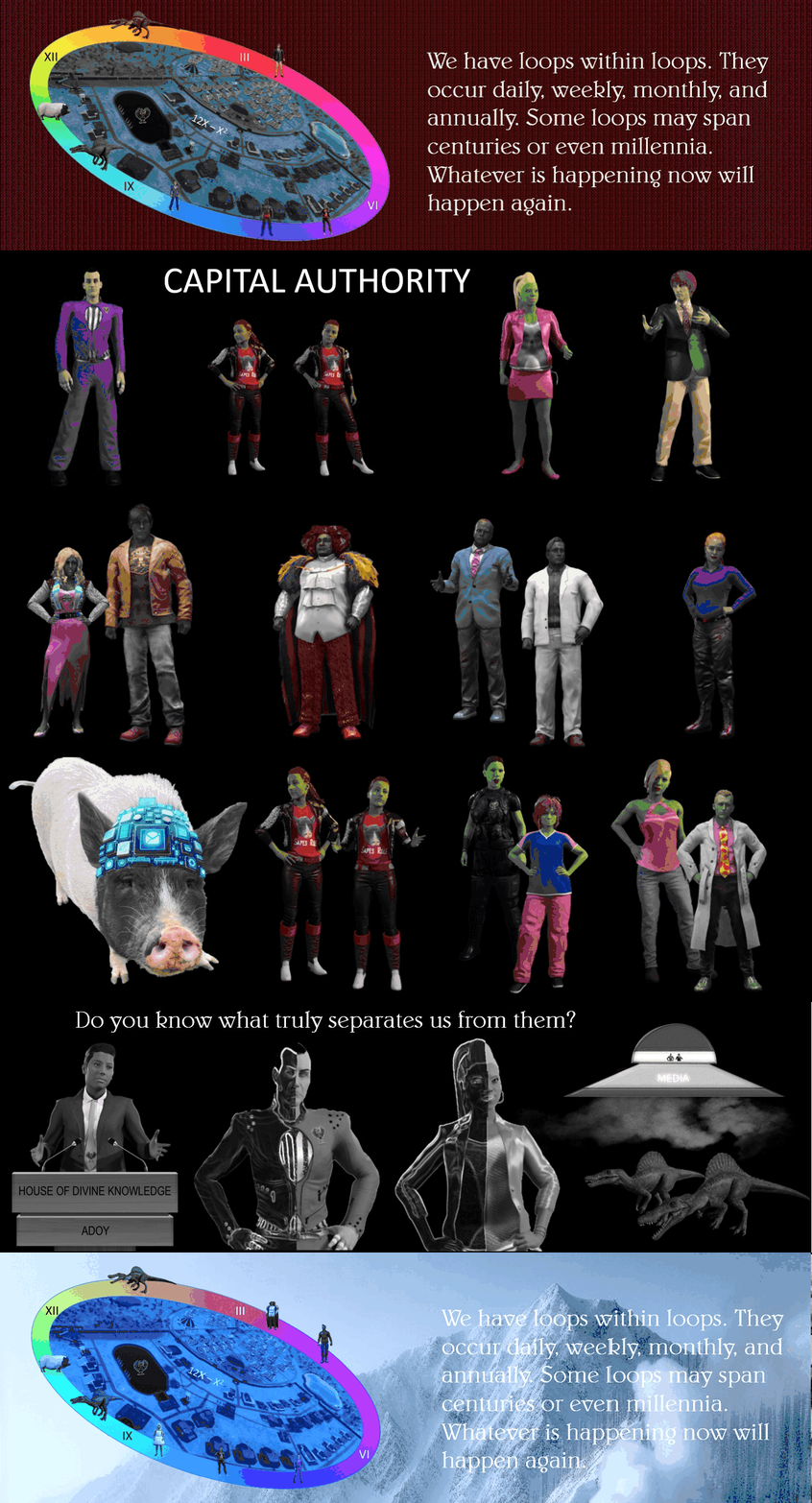
I have written a trilogy of books titled Sapien Loop. The first in the series is Sapien Loop: End of an Era, the second is Sapien Loop: Frozen in Time, and the third is Sapien Loop: Worlds Collide. I published the whole series as ebooks on Amazon, and I have posted completed chapters to my @captainhive
In 2025, I wrote a short stories book about some of the characters and their adventures. This book is now available on Amazon. I have also posted these stories to my @captainhive account.
Brief Summary of Sapien Loop: End of an Era
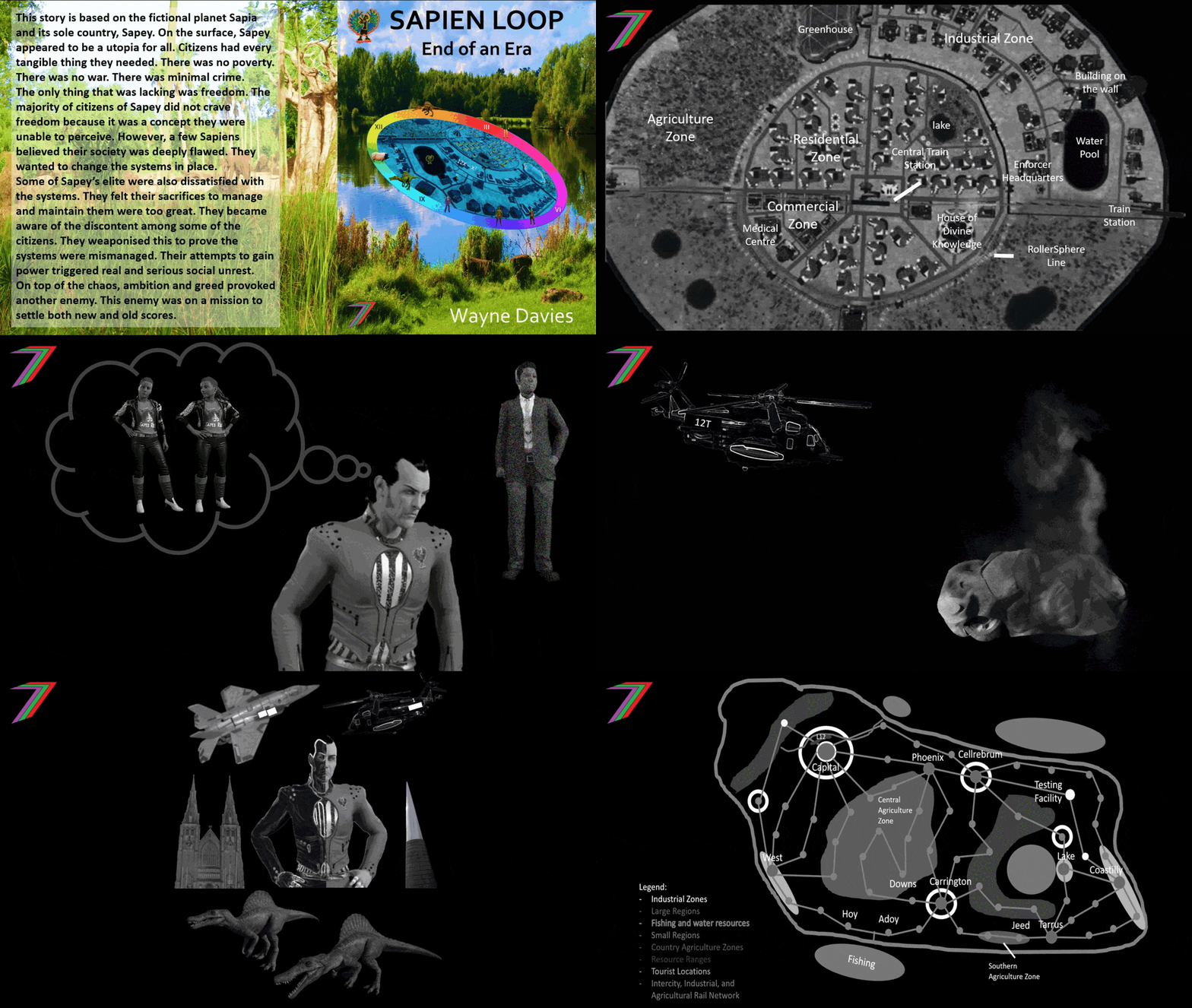
This story is based on the fictional planet Sapia and its sole country, Sapey. Sapey is portrayed as a form of utopia for all its citizens. No poverty. No war. Almost no crime. Opportunities for all.
This was enough for most citizens, but not all. In one of the small regions, some of the citizens had become discontent. They felt something important was missing in their lives. Their discontent did not go unnoticed. Some of the Sapey elite wanted to weaponise this discontent to gain more power. This created more chaos than they anticipated. This led to further widespread social unrest.
On top of the chaos, ambition and greed provoked another enemy. This enemy was on a mission to settle both new and old scores.
Brief Summary of Sapien Loop: Frozen in Time

This story is based six years after the original story. The Downs Region is still suffering from a serious health crisis caused by the contaminated water. The main characters are desperately trying to find a cure for the illness that has been caused by the water.
One of the main characters has discovered frozen humanoids in hidden chambers. It appears they have been frozen for a long time. These chambers connect to a vast network of tunnels. While exploring the tunnels, one of the frozen humanoids disappears. It appears he has been stolen.
The story takes a step back in time to tell the story of the frozen humanoids. How and why were they frozen? This part of the story also explains the fall of ancient Sapey and the birth of the Sapiens. Can those from the past be able to coexist with those from the present?
Brief Summary of Sapien Loop: Worlds Collide

Sapien Loop: Worlds Collide continues the story directly after the events of the second book. Orcilla and Yassmay continue their journey to find help. In doing so, they encounter a dissident group from the underground world.
Tiberius is secured as the puppet leader for the underground Linap. He is being used to control the surface world from the Downs Region. Tiberius is unhappy with this arrangement and desires to be fully in control.
Resistance has formed to take back the Downs Region from Tiberius and the underground Linap. They aim to turn the underground population against Tiberius. If that fails, their only hope is to join forces with the dissident group Orcilla and Yassmay encountered.
All worlds may be destined to collide. Will Sapey finally be free of tyranny, is it destined to be destroyed, or is it locked into another loop of oppression?
Hive: Future of Social Media

Spectrumecons on the Hive Blockchain

One of America's goals can be the price of oil, which hurts China
It hurts everyone other than the oil companies that can still sell their oil.
This post has been manually curated by @steemflow from Indiaunited community. Join us on our Discord Server.
Do you know that you can earn a passive income by delegating to @indiaunited. We share more than 100 % of the curation rewards with the delegators in the form of IUC tokens.
Here are some handy links for delegations: 100HP, 250HP, 500HP, 1000HP.
100% of the rewards from this comment goes to the curator for their manual curation efforts. Please encourage the curator @steemflow by upvoting this comment and support the community by voting the posts made by @indiaunited.
You've been curated by @amazingdrinks! Delegations welcome!
A huge amount to unpack in this post and there is plenty of good analysis.
But there are also some big flaws.
1 Israel is not isolated and is far more influential and powerful globally than ever.
This is in the normal sense of the influence of powerful nations, not some foolish conspiracy theories which you are correct to debunk.
Israel is also far less reliant on the US than ever and has massively increased defence self-sufficiency. Bibi is pushing an END to US Aid to Israel. You missed this important point.
India is a huge but quiet counterweight to US dependency and has been a major defence supplier to Israel (as well as Israel's largest defence customer).
Many South American countries (Argentina, Venezuela, Columbia, El Salvador and others) have shifted dramatically to be pro-Israel and are moving Embassies to Jerusalem and recognising Israeli sovereignty over Golan Heights.
What is actually happening is that Europe is declining economically, isolating itself and making itself increasingly irrelevant. Certain European countries engage in meaningless virtue signalling "sanctions" of Israel or Israeli people, while European defence and technological dependence on Israel increases year by year. Huge European defence purchases of Israeli weapons are making Israeli defence companies extremely profitable.
Europe has no real options other than (expensive but generally good) US weapons or (better and cheaper) Israeli weapons. Europe faces an awakened and wounded bear in Russia and is not prepared to fight with the bravery or suffer the massive human cost Ukraine has. Greece and Cyprus have formed a formal military alliance with Israel - directed at Turkey.
Europe is also increasingly reliant on Israeli gas (via Egyptian LNG) and proposed pipelines.
2 The US Israel relationship is more complex than you present and the US was the junior partner in the Iran War and bore most of the costs.
The facts are that Israel decided that it was going to attack Iran to stop an imminent nuclear breakout threat. The US decided it needed to join to protect its troops and allies in the Gulf and also because it needed to stop Iran going nuclear. Rubio confirmed that Israel said it was going alone and the US decided to join. This is unlike in the 12 day War when the US stayed out except at the end.
The facts are that Israel's extraordinary early successes (which the US didn't believe possible) paved the way for the more risk averse US military to join.
Israel conducted the majority of the the strikes in the first part of the war and also did by far the most damaging ones. Only later in the war when Iranian air defence was gone and the B-52s joined did the US catch up to Israel on sortie and strike numbers.
While US military losses were very light, they were still higher than Israel's (because any number is higher than zero). Israel still has not lost a single plane or soldier to direct Iranian attack. It suffered some civilian casualties but heavily skewed to the earlier parts of the war.
The US has also suffered from their inability to fully protect their allies from Iranian attack. In contrast the UAE was able to properly protect itself because Israel provided defensive systems which are demonstrably better than US systems.
Of course it is not in US or Israeli interests to note this reality. But certainly in the region, Israel is more powerful than the US.
3 The Straits of Hormuz is not an Israeli interest and only a US one indirectly. Its usefulness to Iran as leverage is limited.
While Europe, Asia and others have suffered from Iranian attempts to close the Straits of Hormuz (that never fully succeeded and are less and less effective each day) Israel & the US have not.
Israel has zero reliance on the Straits and benefits from higher oil prices because it is a major gas exporter and the gas is priced based on Brent Crude. Petrol prices barely moved in Israel and they have never been a political issue.
The US also doesn't rely on Hormuz and as the world's largest exporter of petroleum products also benefits as a whole from higher oil prices. But because the super profits of oil companies aren't passed onto consumers at the pump there is a political cost (which could easily be removed by cross subsidisation from supra-profits like Israel, Australia and many other countries do).
However the US is indirectly impacted because of its Gulf allies (which need to export their oil and gas) and their Asian allies (which need the oil & gas) and a general sensitivity to the global economy.
So Iran has some leverage over the US because of Hormuz, but zero on Israel.
4 You have Israeli public opinion quite wrong.
You are using a left biased source reknown for push polling.
Israeli support for the war on Iran was and is 95% (a stark contrast to division on most other issues).
5 Israel is stronger than ever and is the clear military superpower of the region.
Israel is very obviously much better off. All its enemies have had their military power to threaten Israel completely destroyed. Israel controls substantial new strategic territory in Gaza, Syria & Lebanon. The Lebanese government has formally agreed to long term Israel occupation (until Hizbollah is disarmed and disbanded).
Its economy is booming, in part because of huge defence deals driven by its military success.
Far from needing to detach itself from the US, Israel has managed to have very strong relationships with the world's two strongest powers- US & India and decent relationships with the other two major powers Russia and China.
No other country has such good relationships with US, India, Russia and China.
The success of Israeli weapons systems and failure of Russian and Chinese one vs Iran and also in India vs Pakistan has made Russia and China very focussed on good relations. Russia does not want Ukraine getting Israeli weapons. China doesn't want Taiwan getting them either.
Israel is also an important market for China as all other advanced economies have shrinking consumer bases (demographic collapse) and are increasingly heavily tariffing Chinese products.
Thanks for another great response.
You make a good point about Bibi Netanyahu wanting to eventually end military aid from the US. It's a bold pledge, but I would argue it's a good move.
Building relationships with other countries is important. That involves a good relationship with the leadership as well as general approval from their populations for that to be sustained.
Of the countries you mentioned, Israel's strong relationship with India is probably the most significant and important positive because of the potential.
You mentioned the left-wing bias of the poll. There are some complaints about the Democracy Institute's left-wing bias. Many in academia have a left-wing bias. The UK's top universities, such as Cambridge and Oxford, in particular, have a very strong left-wing bias. It comes down to the extent this bias influences the results.
The Institute for National Security Studies has conducted several surveys. I couldn't find questions regarding US influence on Israel's military decisions, but they asked a few about the Iran War. Below are some of the responses from March this year.
If we assume this survey is accurate, it is an indication that people are losing confidence in the war effort. The Chief of Staff of the IDF's warning regarding manpower is also concerning (News 18).
Comments made by former IDF commander Itzhak Brik are even more concerning. He claims that Trump has greatly underestimated Iran, thinking they would be quickly defeated. He fears Trump will give up and Iran could become an economic, nuclear, and missile power (Israel National News).
I assume these are knowledgeable people. It is also possible they have other agendas. They might just simply be wrong.
The IDF's "manpower shortage" is actually part of a political debate over the Haredim serving and more generally about load sharing within Israeli society.
It is true that one sector of society (the national religious 10-15% of population) bore a disproportionate amount of the combat casualties because their youth is most motivated to join combat units and are a high percentage of combat soldiers. They are also the most motivated reservists.
Secular people do serve in combat units but there was a skewing towards "safer" non-combat roles and particularly more lucrative (career wise) intelligence roles (ie 8200) that lead to high tech success.
It used to be the case that if you got both a top intellectual profile and physical profile you would go into intelligence, not combat. Now many are sent to combat.
If you look at the birthrates from 18 - 25 years ago you will see that there was a huge increase in Jewish births over this period and thus the IDF actually has far more potential recruits than ever before. This increase was partly Haredim but also more generally.
So there is no overall manpower shortage, indeed there is more manpower than ever before.
But these are definitely issues about correct balancing of combat vs non-combat forces (which is being addressed with new recruiting pushing more into combat) and the sharing of the load within Israeli society.
On hive it's like some people don't realise everything is documented and you can never hide from the truth 😂😂😂😂😂🍻

@acidyo @neoxian @themarkymark @hurtlocker @jacobtothe @steevc @meno @theycallmedan @crimsonclad and friends ✨⭕✨😂😂😂
Do you really think no one sees what you do 🤔
@acidyo You took my rep away for no reason with the help of blocktrades delegation 😂 @steevc knows all about it
You and themarkymark work for blocktrades or are blocktrades 😂
You are so sad doing what you do
Promoting your 💩💩💩💩💩💩
Selfvoting your 💩💩💩💩💩💩💩💩💩
You have downvoted so many people away for no reason
You really need to have a hard long look in the mirror and see what you have become
It doesn't matter if you have people who believe anything you say for a few cents or a few pennies 😂😂😂😂
Look at your buddy oldsoulnewb 😂😂😂😂😂
Everything is documented
So the choice is yours again leave me alone and bring my rep back and I will stop sharing the truth
You can call my long copy paste comments spam but it only makes you look stupid 😂

I hope you understand you are only making it worse 😂
Hive is not a game it might be a big game to you 🤔
It seems you love to game Hive don't you 😜
Everyone sees don't you think it's time to stop 🛑
You have shown all the real issues with Hive 😂 you have shown why real people couldn't invest in Hive and build on Hive 😂
You are in god mode 😂 activated 😂 you Marky Dan and others 😂😂😂😂😜
I hope you enjoyed this post or you might see in comment from 😂 which you like to call spam 😂😂😂
@jacobtothe Keep digging just remember @acidyo took my rep away with the help of blocktrades delegations and everything is documented 😂😂😂
☝🏾✨⭕✨☝🏾🍻🍻🍻🍻
👇🏾👇🏾👇🏾👇🏾👇🏾👇🏾👇🏾
@jacobtothe and friends Please get help there's clearly something wrong with you 🙏🏾
I hope blocktrades pays you well enough 😂😂😂😂
Some people just never learn when 😂😂😂👇🏾👇🏾👇🏾👇🏾👇🏾👇🏾👇🏾👇🏾👇🏾👇🏾👇🏾👇🏾
@jacobtothe @livinguktaiwan @oflyhigh @abit @adm @eval @hivetoday @abitmore @hurtlocker @hurt-locker @epstein @gundamzerofour @gundamzerotwo @gundamzerofive @buratus @gungunkrishu @tarabh @nattosenpai @fw206 @ocd @acidyo @hivetrending @mrtats @poshtoken @davideownzall @dudeontheweb @caspermoeller89 @strawhat @angeluxx @cositav @rachaeldwatson @solumviz @poshtoken.wallet @shiftrox @hiddenblade @hivegc @alohaed @tobias-g @nattosenpai @hivetrending @erikah @davidke20 @davideownzall @zingtoken @honey-swap @friendlymoose @x-rain @hivegc @rishi556 @ocd-witness @russia-btc @ocdb @justinw @nutritree @themarkymark @geekgirl @buynburn @stresskiller @forkyishere @forykw @belikechuck @leovoter @upmyvote @punkteam @makerhacks @wiseagent @steevc @davidthompson57 @videoaddiction @annoyingmosquito @meesterboom @demotruk @meno @thelittlebank @knot @buttcoins @snapie @coolmole @davidickeyyall @crimsonclad @smooth @oldsoulnewb @ds-tech @artgirl @flemingfarm @neoxian @nwothini335 @bdvoter.cur @zaku @mango-juice @empo.voter @empoderat @ferranlogs @trumpman @bhattg @azircon @riverflows @lazy-panda @gogreenbuddy @tarazkp @buildawhale @logic @abit @freedom @solominer @letusbuyhive @bijoy12 @sagarkothari88 @theycallmedan @ipromote @apeminingclub @nathen007 @dlmmqb @slobberchops @chops316 @littlenewthings @bozz @adm @abit @cwow2 @adm @logic @savvyplayer @patrice @spaminator @topcomment @theworldaroundme @jongolson @mobi72 and friends ✨⭕✨ Please get help 🙏🏾
@jacobtothe @acidyo @themarkymark @hurtlocker and friends 😁 No one will ever trust you again you weirdo 😂
👇🏾👇🏾👇🏾👇🏾👇🏾👇🏾👇🏾
Hello everyone I hope you are all good and well today in this post is some of the evidence to prove my case
If you didn't know I've been getting downvoted for a long time on Hive
They have been trying to bully me with downvotes and words but it doesn't affect me I've been online for over 25 years
So I've dealt with people like this before it's nothing new
But what they are doing is bad Very badi joined steemit like everyone else thinking it offers freedom but I must say steemit offered much more freedom than Hive does
Everyone already knows I only post my own original content I have no need to steal anything from anyone
I've been labelled a lot of things on Hive 😂 by the biggest farmers scammers and downvoters
Actions speak louder than any words do especially when them words are coming from a compolsive liars
I will keep updating this post when I get time
https://hive.blog/hive/@ureka.stats/the-untrending-report-hive-downvote-analysis-16-09-2025-20250916181314
https://hive.blog/hivedev/@makerhacks/please-peakd-allow-me-to-completely-block-spammers-would-you-ever-vote-for-this
https://hive.blog/hive-167547/@dlmmqb/re-kgakakillerg-t34wy6
https://hive.blog/hive-170475/@acidyo/re-kgakakillerg-t32sw1
https://hive.blog/hive-167922/@themarkymark/re-kgakakillerg-t30ziu
https://hive.blog/hive/@ureka.stats/the-untrending-report-hive-downvote-analysis-29-09-2025-20250929172045
No downvotes for this racist person 🧐
https://hive.blog/hive-196387/@acidyo/re-kgakakillerg-t41yr6
https://hive.blog/dvs/@dhedge/re-kgakakillerg-t3clz3
https://hive.blog/hive-150329/@kgakakillerg/t3a8fu
https://hive.blog/musical/@steevc/re-kgakakillerg-t2kz1m this post
To all the downvoters on Hive When the downvotes stop 🛑 and my rep is back I stop sharing the truth 🙏🏾
☝🏾☝🏾☝🏾☝🏾☝🏾☝🏾 Keep calling the truth lies 😂☝🏾
So many pretend to be doing god's work but they are really working for the devil 👿
Karma will strike you and who ever supports you 🙏🏾
☝🏾☝🏾☝🏾☝🏾☝🏾☝🏾☝🏾☝🏾☝🏾☝🏾☝🏾☝🏾
To @jacobtothe and friends 😁
@crimsonclad please do your job 🙏🏾
https://hive.blog/hive-135178/@crimsonclad/re-kgakakillerg-sxllhv
https://hive.blog/hive-148441/@hivewatchers/svftu9
https://hive.blog/hive-148441/@hivewatchers/svdjjz
https://hive.blog/hive-176853/@steevc/re-kgakakillerg-syyy4x
https://hive.blog/dev/@howo/re-kgakakillerg-szhax7
https://hive.blog/hive/@steevc/follow-friday-respect
https://hive.blog/hive-127022/@shmoogleosukami/re-kgakakillerg-t0hcxc
It's unbelievable that they downvoted this Goodbye Auntie R.I.P 🙏🏾
Comments being downvoted by blocktrades https://hive.blog/hive-170744/@kgakakillerg/t0ns3b
https://hive.blog/hive-127466/@steevc/re-blocktrades-t0kint
https://hive.blog/hive-127466/@blocktrades/t0lq41
https://hive.blog/hive/@ureka.stats/the-untrending-report-hive-downvote-analysis-2025-06-29-20250629143829
https://hive.blog/hive-127466/@kgakakillerg/t0m1vn
https://hive.blog/hive-108278/@kgakakillerg/t0rfo8
https://hive.blog/hive-127466/@kgakakillerg/t0vcl7
Stop farming Hive https://hive.blog/burnpost/@buildawhale/re-1756307402814502169-20250827t151240z
😂😂😂😂😂
📊 The Untrending Report - Hive Downvote Analysis - 2025-09-07
RE: Understanding Pointers in C Programming
Please Peakd, allow me to completely block spammers (Would you ever vote for this?) thanks for exposing yourself more @makerhacks
Please go through it all instead of calling it spam 😂😂😂😂🤣🤣🤣🤣🤣🤣🤣
https://blurt.blog/hive/@candy49/5slvnx-taskmaster4450-is-being-downvoted-on-hive-by-you-know-who
🚨🚨🚨🚨🚨🚨🚨🙄🙄🙄🙄🚨🚨🚨🚨
https://hive.blog/hive-108278/@kgakakillerg/themarkymark
https://hive.blog/hive-178138/@thefed/t6q9kb 🙄🙄🙄🙄🙄🙄🙄🚨🚨🚨🚨🚨🚨🚨🚨🙄🙄🙄🙄🙄
https://hive.blog/music/@geneeverett33/11-25-25-three-tune-tuesday-picking-tunes-from-the-punk-band-the-descendents-1982-1997-era
🚨🚨🚨🙄🙄🙄🙄🙄🙄🙄🚨🚨🚨🚨🚨
https://hive.blog/dmania/@steemcleaners/ps46kb
https://hive.blog/hive-124838/@fjworld/re-peaksnaps-t7161i
🚨🚨🚨🚨🙄🙄🙄🙄🙄🙄🙄🙄🙄🚨🚨🚨🚨
https://blurt.blog/blurt-131902/@condividisulweb/3w94e8-hive-manipulation-censorship-and-suspicious-funds-the-hidden-truth
🚨🚨🚨🚨🙄🙄🙄🙄🚨🚨🚨
https://hive.blog/hive/@kgakakillerg/i-ve-been-put-on-two-blacklists
Thank you for reading and viewing this post
To all the downvoters on Hive When the downvotes stop 🛑 and my rep is back I stop sharing the truth 🙏🏾
I'm sharing the truth I know it hurts you but it is what it is 😂🍻
It's crazy that hives market cap is 36 million dollars 🤔🧐 and a account to hold 24 million dollars 💰 crazy
To everyone who is turning a blind eye to the truth karma will strike you down 🙏🏾
Stop Doing the devils work do gods work 🙏🏾
☝🏾😂😂😂😂😂😂😂😂📷📸📸
☝🏾☝🏾☝🏾☝🏾☝🏾
#themarkymarkfiles #buildawhalefiles #acidyofiles #hurtlockerfiles #neoxianfiles #louis88files #azirconfiles #jacobtothefiles #ausbitbankfiles #poshtokenfiles #menofiles #Guiltypartiesfiles #Usainvotefiles #smoothfiles
☝🏾☝🏾☝🏾☝🏾☝🏾☝🏾☝🏾☝🏾
On hive it's like some people don't realise everything is documented and you can never hide from the truth 😂😂😂😂😂🍻

@acidyo @neoxian @themarkymark @hurtlocker @jacobtothe @steevc @meno @theycallmedan @crimsonclad and friends ✨⭕✨😂😂😂
Do you really think no one sees what you do 🤔
@acidyo You took my rep away for no reason with the help of blocktrades delegation 😂 @steevc knows all about it
You and themarkymark work for blocktrades or are blocktrades 😂
You are so sad doing what you do
Promoting your 💩💩💩💩💩💩
Selfvoting your 💩💩💩💩💩💩💩💩💩
You have downvoted so many people away for no reason
You really need to have a hard long look in the mirror and see what you have become
It doesn't matter if you have people who believe anything you say for a few cents or a few pennies 😂😂😂😂
Look at your buddy oldsoulnewb 😂😂😂😂😂
Everything is documented
So the choice is yours again leave me alone and bring my rep back and I will stop sharing the truth
You can call my long copy paste comments spam but it only makes you look stupid 😂

I hope you understand you are only making it worse 😂
Hive is not a game it might be a big game to you 🤔
It seems you love to game Hive don't you 😜
Everyone sees don't you think it's time to stop 🛑
You have shown all the real issues with Hive 😂 you have shown why real people couldn't invest in Hive and build on Hive 😂
You are in god mode 😂 activated 😂 you Marky Dan and others 😂😂😂😂😜
I hope you enjoyed this post or you might see in comment from 😂 which you like to call spam 😂😂😂
@jacobtothe Keep digging just remember @acidyo took my rep away with the help of blocktrades delegations and everything is documented 😂😂😂
☝🏾✨⭕✨☝🏾🍻🍻🍻🍻
👇🏾👇🏾👇🏾👇🏾👇🏾👇🏾👇🏾
@jacobtothe and friends Please get help there's clearly something wrong with you 🙏🏾
I hope blocktrades pays you well enough 😂😂😂😂
Some people just never learn when 😂😂😂👇🏾👇🏾👇🏾👇🏾👇🏾👇🏾👇🏾👇🏾👇🏾👇🏾👇🏾👇🏾
@jacobtothe @livinguktaiwan @oflyhigh @abit @adm @eval @hivetoday @abitmore @hurtlocker @hurt-locker @epstein @gundamzerofour @gundamzerotwo @gundamzerofive @buratus @gungunkrishu @tarabh @nattosenpai @fw206 @ocd @acidyo @hivetrending @mrtats @poshtoken @davideownzall @dudeontheweb @caspermoeller89 @strawhat @angeluxx @cositav @rachaeldwatson @solumviz @poshtoken.wallet @shiftrox @hiddenblade @hivegc @alohaed @tobias-g @nattosenpai @hivetrending @erikah @davidke20 @davideownzall @zingtoken @honey-swap @friendlymoose @x-rain @hivegc @rishi556 @ocd-witness @russia-btc @ocdb @justinw @nutritree @themarkymark @geekgirl @buynburn @stresskiller @forkyishere @forykw @belikechuck @leovoter @upmyvote @punkteam @makerhacks @wiseagent @steevc @davidthompson57 @videoaddiction @annoyingmosquito @meesterboom @demotruk @meno @thelittlebank @knot @buttcoins @snapie @coolmole @davidickeyyall @crimsonclad @smooth @oldsoulnewb @ds-tech @artgirl @flemingfarm @neoxian @nwothini335 @bdvoter.cur @zaku @mango-juice @empo.voter @empoderat @ferranlogs @trumpman @bhattg @azircon @riverflows @lazy-panda @gogreenbuddy @tarazkp @buildawhale @logic @abit @freedom @solominer @letusbuyhive @bijoy12 @sagarkothari88 @theycallmedan @ipromote @apeminingclub @nathen007 @dlmmqb @slobberchops @chops316 @littlenewthings @bozz @adm @abit @cwow2 @adm @logic @savvyplayer @patrice @spaminator @topcomment @theworldaroundme @jongolson @mobi72 and friends ✨⭕✨ Please get help 🙏🏾
@jacobtothe @acidyo @themarkymark @hurtlocker and friends 😁 No one will ever trust you again you weirdo 😂
👇🏾👇🏾👇🏾👇🏾👇🏾👇🏾👇🏾
Hello everyone I hope you are all good and well today in this post is some of the evidence to prove my case
If you didn't know I've been getting downvoted for a long time on Hive
They have been trying to bully me with downvotes and words but it doesn't affect me I've been online for over 25 years
So I've dealt with people like this before it's nothing new
But what they are doing is bad Very badi joined steemit like everyone else thinking it offers freedom but I must say steemit offered much more freedom than Hive does
Everyone already knows I only post my own original content I have no need to steal anything from anyone
I've been labelled a lot of things on Hive 😂 by the biggest farmers scammers and downvoters
Actions speak louder than any words do especially when them words are coming from a compolsive liars
I will keep updating this post when I get time
https://hive.blog/hive/@ureka.stats/the-untrending-report-hive-downvote-analysis-16-09-2025-20250916181314
https://hive.blog/hivedev/@makerhacks/please-peakd-allow-me-to-completely-block-spammers-would-you-ever-vote-for-this
https://hive.blog/hive-167547/@dlmmqb/re-kgakakillerg-t34wy6
https://hive.blog/hive-170475/@acidyo/re-kgakakillerg-t32sw1
https://hive.blog/hive-167922/@themarkymark/re-kgakakillerg-t30ziu
https://hive.blog/hive/@ureka.stats/the-untrending-report-hive-downvote-analysis-29-09-2025-20250929172045
No downvotes for this racist person 🧐
https://hive.blog/hive-196387/@acidyo/re-kgakakillerg-t41yr6
https://hive.blog/dvs/@dhedge/re-kgakakillerg-t3clz3
https://hive.blog/hive-150329/@kgakakillerg/t3a8fu
https://hive.blog/musical/@steevc/re-kgakakillerg-t2kz1m this post
To all the downvoters on Hive When the downvotes stop 🛑 and my rep is back I stop sharing the truth 🙏🏾
☝🏾☝🏾☝🏾☝🏾☝🏾☝🏾 Keep calling the truth lies 😂☝🏾
So many pretend to be doing god's work but they are really working for the devil 👿
Karma will strike you and who ever supports you 🙏🏾
☝🏾☝🏾☝🏾☝🏾☝🏾☝🏾☝🏾☝🏾☝🏾☝🏾☝🏾☝🏾
To @jacobtothe and friends 😁
@crimsonclad please do your job 🙏🏾
https://hive.blog/hive-135178/@crimsonclad/re-kgakakillerg-sxllhv
https://hive.blog/hive-148441/@hivewatchers/svftu9
https://hive.blog/hive-148441/@hivewatchers/svdjjz
https://hive.blog/hive-176853/@steevc/re-kgakakillerg-syyy4x
https://hive.blog/dev/@howo/re-kgakakillerg-szhax7
https://hive.blog/hive/@steevc/follow-friday-respect
https://hive.blog/hive-127022/@shmoogleosukami/re-kgakakillerg-t0hcxc
It's unbelievable that they downvoted this Goodbye Auntie R.I.P 🙏🏾
Comments being downvoted by blocktrades https://hive.blog/hive-170744/@kgakakillerg/t0ns3b
https://hive.blog/hive-127466/@steevc/re-blocktrades-t0kint
https://hive.blog/hive-127466/@blocktrades/t0lq41
https://hive.blog/hive/@ureka.stats/the-untrending-report-hive-downvote-analysis-2025-06-29-20250629143829
https://hive.blog/hive-127466/@kgakakillerg/t0m1vn
https://hive.blog/hive-108278/@kgakakillerg/t0rfo8
https://hive.blog/hive-127466/@kgakakillerg/t0vcl7
Stop farming Hive https://hive.blog/burnpost/@buildawhale/re-1756307402814502169-20250827t151240z
😂😂😂😂😂
📊 The Untrending Report - Hive Downvote Analysis - 2025-09-07
RE: Understanding Pointers in C Programming
Please Peakd, allow me to completely block spammers (Would you ever vote for this?) thanks for exposing yourself more @makerhacks
Please go through it all instead of calling it spam 😂😂😂😂🤣🤣🤣🤣🤣🤣🤣
https://blurt.blog/hive/@candy49/5slvnx-taskmaster4450-is-being-downvoted-on-hive-by-you-know-who
🚨🚨🚨🚨🚨🚨🚨🙄🙄🙄🙄🚨🚨🚨🚨
https://hive.blog/hive-108278/@kgakakillerg/themarkymark
https://hive.blog/hive-178138/@thefed/t6q9kb 🙄🙄🙄🙄🙄🙄🙄🚨🚨🚨🚨🚨🚨🚨🚨🙄🙄🙄🙄🙄
https://hive.blog/music/@geneeverett33/11-25-25-three-tune-tuesday-picking-tunes-from-the-punk-band-the-descendents-1982-1997-era
🚨🚨🚨🙄🙄🙄🙄🙄🙄🙄🚨🚨🚨🚨🚨
https://hive.blog/dmania/@steemcleaners/ps46kb
https://hive.blog/hive-124838/@fjworld/re-peaksnaps-t7161i
🚨🚨🚨🚨🙄🙄🙄🙄🙄🙄🙄🙄🙄🚨🚨🚨🚨
https://blurt.blog/blurt-131902/@condividisulweb/3w94e8-hive-manipulation-censorship-and-suspicious-funds-the-hidden-truth
🚨🚨🚨🚨🙄🙄🙄🙄🚨🚨🚨
https://hive.blog/hive/@kgakakillerg/i-ve-been-put-on-two-blacklists
Thank you for reading and viewing this post
To all the downvoters on Hive When the downvotes stop 🛑 and my rep is back I stop sharing the truth 🙏🏾
I'm sharing the truth I know it hurts you but it is what it is 😂🍻
It's crazy that hives market cap is 36 million dollars 🤔🧐 and a account to hold 24 million dollars 💰 crazy
To everyone who is turning a blind eye to the truth karma will strike you down 🙏🏾
Stop Doing the devils work do gods work 🙏🏾
☝🏾😂😂😂😂😂😂😂😂📷📸📸
☝🏾☝🏾☝🏾☝🏾☝🏾
#themarkymarkfiles #buildawhalefiles #acidyofiles #hurtlockerfiles #neoxianfiles #louis88files #azirconfiles #jacobtothefiles #ausbitbankfiles #poshtokenfiles #menofiles #Guiltypartiesfiles #Usainvotefiles #smoothfiles
☝🏾☝🏾☝🏾☝🏾☝🏾☝🏾☝🏾☝🏾
On hive it's like some people don't realise everything is documented and you can never hide from the truth 😂😂😂😂😂🍻

@acidyo @neoxian @themarkymark @hurtlocker @jacobtothe @steevc @meno @theycallmedan @crimsonclad and friends ✨⭕✨😂😂😂
Do you really think no one sees what you do 🤔
@acidyo You took my rep away for no reason with the help of blocktrades delegation 😂 @steevc knows all about it
You and themarkymark work for blocktrades or are blocktrades 😂
You are so sad doing what you do
Promoting your 💩💩💩💩💩💩
Selfvoting your 💩💩💩💩💩💩💩💩💩
You have downvoted so many people away for no reason
You really need to have a hard long look in the mirror and see what you have become
It doesn't matter if you have people who believe anything you say for a few cents or a few pennies 😂😂😂😂
Look at your buddy oldsoulnewb 😂😂😂😂😂
Everything is documented
So the choice is yours again leave me alone and bring my rep back and I will stop sharing the truth
You can call my long copy paste comments spam but it only makes you look stupid 😂

I hope you understand you are only making it worse 😂
Hive is not a game it might be a big game to you 🤔
It seems you love to game Hive don't you 😜
Everyone sees don't you think it's time to stop 🛑
You have shown all the real issues with Hive 😂 you have shown why real people couldn't invest in Hive and build on Hive 😂
You are in god mode 😂 activated 😂 you Marky Dan and others 😂😂😂😂😜
I hope you enjoyed this post or you might see in comment from 😂 which you like to call spam 😂😂😂
@jacobtothe Keep digging just remember @acidyo took my rep away with the help of blocktrades delegations and everything is documented 😂😂😂
☝🏾✨⭕✨☝🏾🍻🍻🍻🍻
👇🏾👇🏾👇🏾👇🏾👇🏾👇🏾👇🏾
@jacobtothe and friends Please get help there's clearly something wrong with you 🙏🏾
I hope blocktrades pays you well enough 😂😂😂😂
Some people just never learn when 😂😂😂👇🏾👇🏾👇🏾👇🏾👇🏾👇🏾👇🏾👇🏾👇🏾👇🏾👇🏾👇🏾
@jacobtothe @livinguktaiwan @oflyhigh @abit @adm @eval @hivetoday @abitmore @hurtlocker @hurt-locker @epstein @gundamzerofour @gundamzerotwo @gundamzerofive @buratus @gungunkrishu @tarabh @nattosenpai @fw206 @ocd @acidyo @hivetrending @mrtats @poshtoken @davideownzall @dudeontheweb @caspermoeller89 @strawhat @angeluxx @cositav @rachaeldwatson @solumviz @poshtoken.wallet @shiftrox @hiddenblade @hivegc @alohaed @tobias-g @nattosenpai @hivetrending @erikah @davidke20 @davideownzall @zingtoken @honey-swap @friendlymoose @x-rain @hivegc @rishi556 @ocd-witness @russia-btc @ocdb @justinw @nutritree @themarkymark @geekgirl @buynburn @stresskiller @forkyishere @forykw @belikechuck @leovoter @upmyvote @punkteam @makerhacks @wiseagent @steevc @davidthompson57 @videoaddiction @annoyingmosquito @meesterboom @demotruk @meno @thelittlebank @knot @buttcoins @snapie @coolmole @davidickeyyall @crimsonclad @smooth @oldsoulnewb @ds-tech @artgirl @flemingfarm @neoxian @nwothini335 @bdvoter.cur @zaku @mango-juice @empo.voter @empoderat @ferranlogs @trumpman @bhattg @azircon @riverflows @lazy-panda @gogreenbuddy @tarazkp @buildawhale @logic @abit @freedom @solominer @letusbuyhive @bijoy12 @sagarkothari88 @theycallmedan @ipromote @apeminingclub @nathen007 @dlmmqb @slobberchops @chops316 @littlenewthings @bozz @adm @abit @cwow2 @adm @logic @savvyplayer @patrice @spaminator @topcomment @theworldaroundme @jongolson @mobi72 and friends ✨⭕✨ Please get help 🙏🏾
@jacobtothe @acidyo @themarkymark @hurtlocker and friends 😁 No one will ever trust you again you weirdo 😂
👇🏾👇🏾👇🏾👇🏾👇🏾👇🏾👇🏾
Hello everyone I hope you are all good and well today in this post is some of the evidence to prove my case
If you didn't know I've been getting downvoted for a long time on Hive
They have been trying to bully me with downvotes and words but it doesn't affect me I've been online for over 25 years
So I've dealt with people like this before it's nothing new
But what they are doing is bad Very badi joined steemit like everyone else thinking it offers freedom but I must say steemit offered much more freedom than Hive does
Everyone already knows I only post my own original content I have no need to steal anything from anyone
I've been labelled a lot of things on Hive 😂 by the biggest farmers scammers and downvoters
Actions speak louder than any words do especially when them words are coming from a compolsive liars
I will keep updating this post when I get time
https://hive.blog/hive/@ureka.stats/the-untrending-report-hive-downvote-analysis-16-09-2025-20250916181314
https://hive.blog/hivedev/@makerhacks/please-peakd-allow-me-to-completely-block-spammers-would-you-ever-vote-for-this
https://hive.blog/hive-167547/@dlmmqb/re-kgakakillerg-t34wy6
https://hive.blog/hive-170475/@acidyo/re-kgakakillerg-t32sw1
https://hive.blog/hive-167922/@themarkymark/re-kgakakillerg-t30ziu
https://hive.blog/hive/@ureka.stats/the-untrending-report-hive-downvote-analysis-29-09-2025-20250929172045
No downvotes for this racist person 🧐
https://hive.blog/hive-196387/@acidyo/re-kgakakillerg-t41yr6
https://hive.blog/dvs/@dhedge/re-kgakakillerg-t3clz3
https://hive.blog/hive-150329/@kgakakillerg/t3a8fu
https://hive.blog/musical/@steevc/re-kgakakillerg-t2kz1m this post
To all the downvoters on Hive When the downvotes stop 🛑 and my rep is back I stop sharing the truth 🙏🏾
☝🏾☝🏾☝🏾☝🏾☝🏾☝🏾 Keep calling the truth lies 😂☝🏾
So many pretend to be doing god's work but they are really working for the devil 👿
Karma will strike you and who ever supports you 🙏🏾
☝🏾☝🏾☝🏾☝🏾☝🏾☝🏾☝🏾☝🏾☝🏾☝🏾☝🏾☝🏾
To @jacobtothe and friends 😁
@crimsonclad please do your job 🙏🏾
https://hive.blog/hive-135178/@crimsonclad/re-kgakakillerg-sxllhv
https://hive.blog/hive-148441/@hivewatchers/svftu9
https://hive.blog/hive-148441/@hivewatchers/svdjjz
https://hive.blog/hive-176853/@steevc/re-kgakakillerg-syyy4x
https://hive.blog/dev/@howo/re-kgakakillerg-szhax7
https://hive.blog/hive/@steevc/follow-friday-respect
https://hive.blog/hive-127022/@shmoogleosukami/re-kgakakillerg-t0hcxc
It's unbelievable that they downvoted this Goodbye Auntie R.I.P 🙏🏾
Comments being downvoted by blocktrades https://hive.blog/hive-170744/@kgakakillerg/t0ns3b
https://hive.blog/hive-127466/@steevc/re-blocktrades-t0kint
https://hive.blog/hive-127466/@blocktrades/t0lq41
https://hive.blog/hive/@ureka.stats/the-untrending-report-hive-downvote-analysis-2025-06-29-20250629143829
https://hive.blog/hive-127466/@kgakakillerg/t0m1vn
https://hive.blog/hive-108278/@kgakakillerg/t0rfo8
https://hive.blog/hive-127466/@kgakakillerg/t0vcl7
Stop farming Hive https://hive.blog/burnpost/@buildawhale/re-1756307402814502169-20250827t151240z
😂😂😂😂😂
📊 The Untrending Report - Hive Downvote Analysis - 2025-09-07
RE: Understanding Pointers in C Programming
Please Peakd, allow me to completely block spammers (Would you ever vote for this?) thanks for exposing yourself more @makerhacks
Please go through it all instead of calling it spam 😂😂😂😂🤣🤣🤣🤣🤣🤣🤣
https://blurt.blog/hive/@candy49/5slvnx-taskmaster4450-is-being-downvoted-on-hive-by-you-know-who
🚨🚨🚨🚨🚨🚨🚨🙄🙄🙄🙄🚨🚨🚨🚨
https://hive.blog/hive-108278/@kgakakillerg/themarkymark
https://hive.blog/hive-178138/@thefed/t6q9kb 🙄🙄🙄🙄🙄🙄🙄🚨🚨🚨🚨🚨🚨🚨🚨🙄🙄🙄🙄🙄
https://hive.blog/music/@geneeverett33/11-25-25-three-tune-tuesday-picking-tunes-from-the-punk-band-the-descendents-1982-1997-era
🚨🚨🚨🙄🙄🙄🙄🙄🙄🙄🚨🚨🚨🚨🚨
https://hive.blog/dmania/@steemcleaners/ps46kb
https://hive.blog/hive-124838/@fjworld/re-peaksnaps-t7161i
🚨🚨🚨🚨🙄🙄🙄🙄🙄🙄🙄🙄🙄🚨🚨🚨🚨
https://blurt.blog/blurt-131902/@condividisulweb/3w94e8-hive-manipulation-censorship-and-suspicious-funds-the-hidden-truth
🚨🚨🚨🚨🙄🙄🙄🙄🚨🚨🚨
https://hive.blog/hive/@kgakakillerg/i-ve-been-put-on-two-blacklists
Thank you for reading and viewing this post
To all the downvoters on Hive When the downvotes stop 🛑 and my rep is back I stop sharing the truth 🙏🏾
I'm sharing the truth I know it hurts you but it is what it is 😂🍻
It's crazy that hives market cap is 36 million dollars 🤔🧐 and a account to hold 24 million dollars 💰 crazy
To everyone who is turning a blind eye to the truth karma will strike you down 🙏🏾
Stop Doing the devils work do gods work 🙏🏾
☝🏾😂😂😂😂😂😂😂😂📷📸📸
☝🏾☝🏾☝🏾☝🏾☝🏾
#themarkymarkfiles #buildawhalefiles #acidyofiles #hurtlockerfiles #neoxianfiles #louis88files #azirconfiles #jacobtothefiles #ausbitbankfiles #poshtokenfiles #menofiles #Guiltypartiesfiles #Usainvotefiles #smoothfiles
☝🏾☝🏾☝🏾☝🏾☝🏾☝🏾☝🏾☝🏾
I have also noticed this one "Countries that have been infiltrated typically adopt Western-styled/acceptable democracies"
It is the easiest way of securing control over another country. Let them believe they run their country!
It’s incredible how politics keeps getting more and more disgusting over time.
Such a great post, @spectrumecons!
They do whatever it takes to advance their agendas.
So true. However... No surprises, right?
Updated in Post
Two more reasons why the US Establishment might want to prolong the war with Iran and keep the Strait of Hormuz closed:
The collapse or shift away from the petrodollar. Iran's control over the Strait of Hormuz is leading to other countries moving away from the US dollar. This will lead to a fall in demand for the US dollar, thus decreasing its value. The significance of the decrease is difficult to determine. High international demand for the dollar has enabled the US to print more money without causing excessive inflation. If international demand falls significantly, inflation in the US could soar. This would hasten the collapse of the US economy and society. The shift away from the US dollar is also likely to lead to a shift towards digital currencies. Digital currencies are desired by the US Establishment for greater control. They can ensure money remains in the system, and if the currency is programmable, they can determine what people spend their money on.
High fuel prices are harming almost all businesses. Operation costs are soaring, and this is particularly true for airlines. Small and even medium businesses are struggling to survive because of these higher costs. Many/most large businesses are able to absorb these higher costs. In the short run, it hurts their profits too, but their ability to survive provides them with greater opportunities in the long run. For example, in the airline industry, larger airlines are buying out smaller, struggling airlines. In the long run, the surviving airlines will have greater market control and face less competition. They will eventually become more profitable. This may also enable the Establishment to have greater control over who travels and to where.